


We really gonna make chopped up arguments that take hours to deal with again? I mean, if you're gonna do so, at least have the stones to actually attribute your quotes. I've no taste for going back to the dark days of yesteryear, but if you insist... just this once.
Something that may have been unintentional, and really, the problem is the Ascians' unwillingness (or inability) to accept the losses incurred during the Final Days. It's not clear whether or not Hydaelyn intended to sunder the Star and every living being on it; she is responsible regardless, but it is the Ascians who refuse to accept the way things are and go about committing genocide and omnicide for their own ends. The Ascians are just as responsible for "forcing" our goals on us as Hydaelyn.
Originally Posted by Veloran

It changes the context, nothing more. Regardless of context the Ascians would still be trying to commit genocide / omnicide, and it's entirely reasonable we'd go against them for the sake of self-preservation.
To say one is compelled is to say they are forced to do something, or have no choice. The situation surrounding Minfilia and "the Word of the Mother" is, admittedly, very shady, but ultimately it was Minfilia's choice to put her faith in, listen to, and become Hydaelyn's mouthpiece. Midgardsormr made a bargain for refuge, as far as anyone can tell, entirely of his own volition. Ryne's situation is more Minfilia's fault than Hydaelyn directly, and the Flood of Light on the First is not her fault at all. People rely on her, but she herself does not force them to do so - outside factors (Ascian machinations, Omega's pursuit, the Flood of Light (again, Ascians)) often drive them to.
Due to weakness brought about by Ascian machinations. One can't fault her for not helping when she lacks the power to do so.
You're stating all life was immortal pre-Sundering. It was not.
Again, the sundering of the Star was, to the best of anyone's knowledge, an unintended side-effect of sundering Zodiark in order to fulfill her directive of binding him. The death that cause was unintended, more likely than not.
Is it? What has Hydaelyn done that pursues any other or a contrary goal?
If we're to believe Emet-Selch at face value, Hydaelyn exists solely to bind Zodiark and keep him from acting with impunity - and the sentiment behind her creation was that the future should belong to those living in the present, rather than those selfsame lives being little more than livestock to fuel his powers. Whatever she may do, whatever she may say, everything she does is geared toward those goals.
Unless you're going to call Emet-Selch a liar, and then doubt everything he told us.
Now, before "certain posters" start the "agree to disagree" shtick, I'm fine with that. Ideological differences aren't a bad thing, but I've no interest in these diatribes (I made a special exception just for you! Don't you feel lucky?), and if we're just going to beat around the bush for the umpteenth time there's no point to this. So believe whatever you want; I really don't care.
-
09-06-2020 08:58 AM #101Player
- Join Date
- Sep 2013
- Location
- The Hermit's Hovel
- Posts
- 3,779
- Character
- Trpimir Ratyasch
- World
- Lamia
- Main Class
- Gunbreaker Lv 100
(18)Trpimir Ratyasch's Way Status (7.5 - End)
[ ]LOST [ ]NOT LOST [X]ALREADY MISSING REAL SPHENE
"There is no hope in stubbornly clinging to the past. It is our duty to face the future and march onward, not retreat inward." -Sovetsky Soyuz, Azur Lane: Snowrealm Peregrination
-
09-06-2020 11:59 AM #102Player
- Join Date
- Dec 2019
- Posts
- 665
- Character
- Vane Weaver
- World
- Diabolos
- Main Class
- Gladiator Lv 84
I'm not sure billions of counts of manslaughter or negligent homicide is any better than murder.A death by natural cause could be blamed on her, but I kinda doubt that was her intention, even as shady as she seems
Here's the million-gil question - What does it actually matter? Everyone they've killed has a max lifespan of maybe a hundred or so years anyway, and they will all inevitably be reborn through the Lifestream to do it again regardless. Killing them all once versus keeping them in squalor and allowing them to die infinite times isn't even a moral dilemma, the former option is simply superior.I still kinda doubt that it is comparable, especially since their plans require throwing all of mortal life into the pyre.
We don't actually know if that new life was inferior in any way to Ancient life. In fact we don't know if that new life was even sapient life, though I'd doubt it.Though I now want to know exactly who created the "new life" that Venat's faction fought to safeguard, because chances are likely that they were the ones that coded in mortality and thus who created them is germane.
Okay, so why shouldn't conquered peoples just lay down and "accept their losses" to the Garleans? Why shouldn't Ishgard have accepted punishment at the claws of Nidhogg? Why shouldn't the Warriors of Darkness have accepted that the First was lost and allowed the Calamity so their people's souls were saved?the problem is the Ascians' unwillingness (or inability) to accept the losses incurred during the Final Days.
"For those we have lost, for those we can yet save", is one of the main running lines of the game. The Ascians lost their people, but they could yet save them, and had promised to do so, moreover after they'd all died to save the world.
People on Hydaelyn's world would be dying and killing each other regardless of the Ascian's involvement. In the old world the Ancients lived in a post-scarcity society where disputes were solved with debate and communion of the soul, it's inarguable that the world she created was worse than the one she destroyed.The Ascians are just as responsible for "forcing" our goals on us as Hydaelyn.
Context is important. And the context here is that she doesn't trust the life she created, the very people she is enlisting the aid of, to know the truth of the conflict they're fighting in, or the reality of her own origins. That is a very bad look. It shows that even she doesn't think she's justified enough that people won't turn against her. This isn't even theoretical, we know WoLs have learned the truth in the past and subsequently joined the Ascians.It changes the context, nothing more.
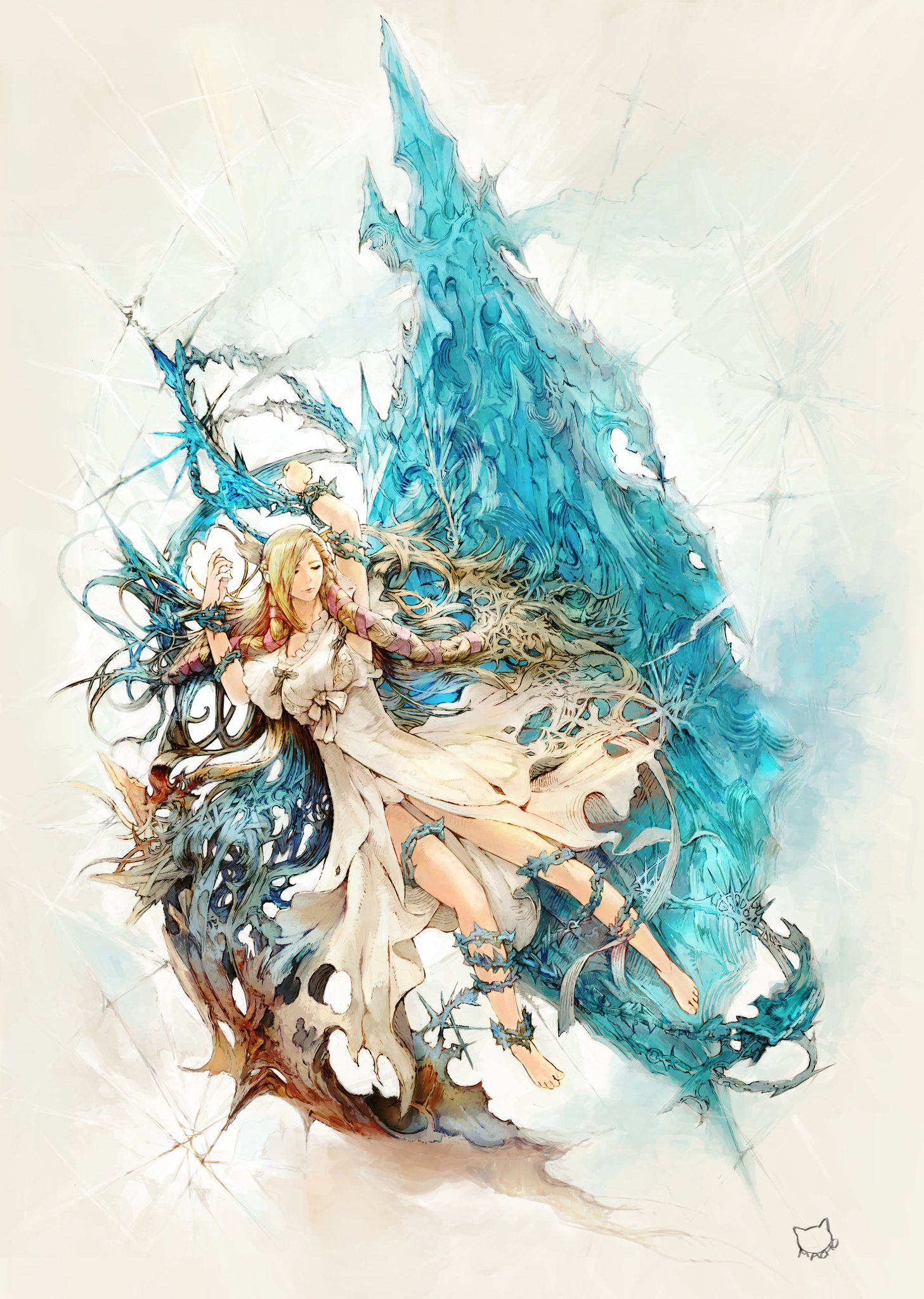
Pictured: Informed consent.The situation surrounding Minfilia and "the Word of the Mother" is, admittedly, very shady, but ultimately it was Minfilia's choice to put her faith in, listen to, and become Hydaelyn's mouthpiece.
"Pledge your soul to me, give me your aether, and guard this lake for eternity and your children may live - Or, get lost and die in space", is, frankly, less a bargain and more an impossible ultimatum. I'll also say, it's stated that "As the Ascians serve as instruments of Zodiark's will, so to must others carry out the will of Hydaelyn." There's an equivalence being drawn there.Midgardsormr made a bargain for refuge, as far as anyone can tell, entirely of his own volition.
She could literally have the power to help if she just asked for it. All of the Warriors of Darkness would gladly have given up their crystals to allow Hydaelyn to intercede. We see with Matoya that crystals of light are just left lying around after she hands them out. I don't even understand how she still exists after 12,000 years if she never takes aether into herself, that should be impossible.One can't fault her for not helping when she lacks the power to do so.
Also, I'll note, the timeline of the First/Hydaelyn weakening here is vague at best. There's no guarantee she was incapable of acting when they were begging her to - We see even in Shadowbringers she's capable of enlisting new sprout WoLs any time they unlock the Echo.
Whether they were fully immortal, extremely long-lived, or possessed the abilities we see with the Echo that allow one to transcend death, they did not at all face death with the same regularity modern souls do. To say nothing of the peaceful, advanced, and seemingly post-scarcity nature of their society.You're stating all life was immortal pre-Sundering. It was not.
This is deep supposition. Anyder summoned Hydaelyn with the ability to sunder while knowing that Zodiark was serving as the Will of the Star and arbiter of the laws of reality. In fact, they say themselves that one of the primary reasons they had to summon Hydaelyn and oppose him was not only to keep him in check, but because they didn't believe he offered a true, permanent solution, that he couldn't even forestall their doom. Venat openly states that should they choose to go forward with their own solution, they would suffer "the eternal condemnation of their brethren".Again, the sundering of the Star was, to the best of anyone's knowledge, an unintended side-effect of sundering Zodiark in order to fulfill her directive of binding him. The death that cause was unintended, more likely than not.
That does not sound like someone who did not anticipate the outcome of their actions.
Zodiark is sealed in the moon. Yet Hydaelyn bound Midgardsormr to Silvertear Lake, to guard it forever. The Anyder state that summoning Hydaelyn was meant to offer a permanent solution to the destruction of the Final Days. Meaning, the binding of Zodiark is not her only objective.What has Hydaelyn done that pursues any other or a contrary goal?
Of everything Emet speaks of, the motivations behind Hydaelyn's summoning is what he is least qualified to give full and accurate information on.Unless you're going to call Emet-Selch a liar
Chill with the passive aggression, damn. I don't know who you're referring to, but take it to them instead.Now, before "certain posters" start the "agree to disagree" shtick, I'm fine with that. Ideological differences aren't a bad thing, but I've no interest in these diatribes (I made a special exception just for you! Don't you feel lucky?), and if we're just going to beat around the bush for the umpteenth time there's no point to this. So believe whatever you want; I really don't care.(4)
-
09-06-2020 03:40 PM #103Player

- Join Date
- Nov 2017
- Posts
- 14,252
- Character
- Aurelie Moonsong
- World
- Bismarck
- Main Class
- Red Mage Lv 100
I think there's a conflation of Hydaelyn's purpose or nature and her personality.
(I realise that there are two view to take on whether her interactions with us thus far are genuine or deceptive, but if I have to acknowledge that every time I talk about her intentions then my post is going to be very stop-start. So please assume that any time I talk about her personality it comes with an if we can take her expressed love for life and humanity at face value attached to it.)
We used to think (or at least the game portrayed her as) a mother-goddess figure. We now know that isn't the case and that she's really a primal, but that does not stop her from being a primal programmed to act with the personality of a mother-goddess.
Her nature as a primal does not automatically overrule her personality of concern for "her children" or her desire to protect them. We have seen other primals with similar benevolence: Ramuh, protector of the forest and the sylphs, concerned that his own presence will destroy what he is called to protect; Alexander, designed to find the best possible future and willing to conclude it's the one that involves taking himself out of the equation.
I think it's quite possible that Hydaelyn would be similarly willing to be brought to an end if the threat of Zodiark is neutralised first. She's also in a very different position in that she doesn't seem to be sapping aether from the land, or she should rightfully be full of it from being submerged in the Lifestream itself and drawing power over thousands of years.
It's a fact that she sundered the star. It's pure conjecture whether she intended to do so or not, and what she actually thinks of having done so - she may deeply regret that it happened.
Debating the ethics of the Sundering feels like a distraction in some ways, because at very least there are two different angles it can be approached from.
There's the theoretical view of how such a proposition should be regarded from the ancients' perspective - that is, at the point where the world was not sundered, debating the ethics of whether doing such a thing to safeguard against a perceived greater threat would be justified. (And it's worth noting that a similar debate could be held regarding the Convocation's decision to summon Zodiark in the first place and "rewrite the laws of the star", but we can't have that debate because we don't understand the exact nature of the threat and what that rewriting would actually entail.)
The thing is, that question of whether it would be ethical to do it is irrelevant. By intent or by accident, the star was sundered and the practical question is that now that it is broken, would it be less harmful to repair it or to let the shards continue to exist? "Repair" involves inflicting a great deal of pain and suffering upon the people of the shards, and doesn't resolve the perceived threat of Zodiark.
If we suppose that Hydalyn's core objective might be something like "protect life as it currently exists and don't let it be sacrificed to bring back the past" then while the star was whole, she acted in a way that she thought would protect it (sealing Zodiark) and perhaps-inadvertently broke it on a greater scale. Now that it's broken, "life as it currently exists" is the fractured life of the shards, and she is compelled to protect that life.
Again, all of this is dependent on where the story goes in future and what Hydaelyn actually has to say for herself at whatever point we confront her with these new questions. She could be malevolent and that could be revealed in future, at which point I will be forced to drop all this theorising and move on to making new theories under that understanding, but for now I don't think the right plot hooks have been placed for such a revelation.
I agree that picture is unsettling, but it seems such a weird out-of-place thing. Are they really revealing that Hydaelyn is evilly capturing Minfilia in some promo art while the game itself portrays her as willing and devoted? Why is this not shown within the game itself, leaving us to interpret Hydaelyn as benevolent because we missed this key piece of context hidden away in an artwork... where, exactly?
Originally Posted by Veloran
(14)
-
09-06-2020 09:46 PM #104Player

- Join Date
- Mar 2017
- Location
- Gridania
- Posts
- 98
- Character
- X'wyhn Lehn
- World
- Moogle
- Main Class
- White Mage Lv 80
It is a known fact that those born in servitude / slavery often were happy with their lot if they were not badly mistreated. Here in Spain, after the Civil War and the dictatorship of 40 years, elders and those who lived through a part of it speak of that they did not even know they were living under a dictatorship unless they traveled to another country, and they they were absolutely baffled at the differences. Why they did not know? That life had been the only thing they knew and thus believed it to be right. Besides, and this happens in many dictatorial regimes, knowledge from outside (books, movies, whatever) is restricted; some people had to have their books for university sent from South America to Spain because they simply were not published here. In fact, we see people in Doma and Ala Mhigo balk at freedom, as Yugiri points out; in their case is more about fear than ignorance, but still, the core fact remains.
Originally Posted by Iscah
What I am trying to say is, even if you do not see Minfilia acting as a slave, it does not change the fact that she is. She is not being whipped or purposefully harmed, but she was whisked away from her people. And knowing Minfilia and her faith in Hydaelyn, telling her she had to surrender her will and everything she was to act as Her Word, she would have done so. Urianger, in fact, uses his plot not just to charge Hydaelyn a bit with the Crystals of Light, but because of that, he could demand Minfilia to be released from being the Word of the Mother. Of course, Minfilia travels to the First and we know what happened there, but the thing is: she did so because of Hydaelyn's command, or because she made the choice then? Ryne reveals in 5.3 that she has never heard Hydaelyn's voice, something Minfilia was known for, and should not the Oracle of Light have a direct connection with Her? Ryne, too, can reverse Light tempering / influence, as we see with the Eulmorans and later containing the WoL/D's Lightwarden transformation.(1)シーヴィヌ・レヌ
| X'wyhn Lehn, the Dragonsong |
| Of the Blood of the Ancients and the Elder Dragons of Meracydia |
-
09-07-2020 01:06 AM #105Player
- Join Date
- Nov 2017
- Posts
- 14,252
- Character
- Aurelie Moonsong
- World
- Bismarck
- Main Class
- Red Mage Lv 100
The thing is, yes if Hydaelyn if malevolent and Minfilia was deceived into trusting Her, then Minfilia would willingly do this because of her misplaced faith in Hydaelyn.
Originally Posted by ShadowMeowth
That in itself is not proof that Hydaelyn is malevolent, because it would play out the same if Hydaelyn is genuine and has only called Minfilia to Her out of dire need.
For a similar circumstance, compare G'raha's response when you question him (in cutscene #1 of Hope's Confluence) if he considered other paths. He says he did, but ultimately while he had the choice to turn away, "it was no choice at all".
It's perhaps hard for us to conceive from our own comfortable viewpoint - certainly for me - to be bold enough to dedicate your life to a cause and be willing to give up everything for the good of others. But that's what these people are willing to do: to put aside their own wants and dreams to act for the greater good. Minfilia goes willingly to Hydaelyn, placing faith in Her call, and later to the First because she alone can save its destruction. If she had the right to refuse that mission, could she willingly do so? I don't believe she would. Without being compelled, by her own morals she personally could not make the choice to not save the First just so she could go back to her friends.
With or without Hydaelyn's influence, the choice to act for the good of others over taking a more comfortable path for herself is, again, no choice at all.(14)
-
09-07-2020 01:27 AM #106Player

- Join Date
- Oct 2017
- Posts
- 1,018
- Character
- Vanessa Van-scaeva
- World
- Jenova
- Main Class
- Summoner Lv 100
Minfillia's character, even going all the way to 1.0, was that she wanted to make a difference in the world. All her goals worked toward the stability of the realm and world. Like many other people, we, in our world-saving way, are the person she wants to be like the most. Because we're the one actually saving the world. So when Minfillia gets the chance to "save the world" she is going to take that. Weather that is by helping Hydaelyn still be capable of talking to us or going to a totally different world to save it. It is what we would have done if we were asked instead!
And a lot of people in-game operate on that logic. "What would the Warrior of Light do?" is what the vast majority of people we meet in ARR, in HW, in ShB, in StB are asking themselves. And the answer all of them come up with is: The Warrior of Light would give sacrificially of themselves so the world wouldn't be doomed. That's the entire reason the Ironworks crazy plan to time-travel in the doomed timel-line works. They told people they were coming up with a crazy plan to save the Warrior of Light, the person everyone wants to be like, in a different time-line and that reason was good enough for a world to willingly make sure it's own past would never happen.
Which is... heh... If you ever look at the end of Final Fantasy I, sacrificing your own time/world to change time so a new and better one happens instead happens there too.
So if you think people blinding having faith in an ideal makes them a slave to it... than the ideal we represent to people is the biggest slave-driver in the entire game. We have that much influence that a truly mind-boggling amount of people will do whatever they think will live up to that ideal.(13)
-
09-07-2020 02:53 AM #107Player
- Join Date
- Mar 2017
- Location
- Gridania
- Posts
- 98
- Character
- X'wyhn Lehn
- World
- Moogle
- Main Class
- White Mage Lv 80
This is, too, what motivated Elidibus, a child, to volunteer as sacrifice for the greater good. Early in 5.3, Alphinaud notes that he believed the surge of heroism amongst the people of the First as Elidibus' ruse, but he admits having been wrong, for it is something that every single individual has always had, and the only thing Elidibus did was giving it a name. Some people, of course, are willing to go to greater lengths for this ideal than others. And then it is when it becomes a complicated thing: heroism giving way to martyrdom. Which is probably why Emet hated the concept of heroism because after a long life such as his, he has not only been direct witness to half his people and Elidibus giving their lives in exchange of the greater good, but he has probably seen it happen again and again in mortal heroes. So much death and tragedy caused by this ideal.
Originally Posted by ObsidianFire
And it turns out that we know Zodiark grew powerful because of the hope of salvation these heroic acts caused. The Exarch calls out to Elidibus twisting this pure ideal of altruism for his machinations, but the Ascians too were victims of that. Zodiark was not even commanding them to do anything, but at least the Unsundered gave up their principles, their wants, their dreams, to save their people as well. The difference is that we see in them what this does to an individual over the course of eons, opposed to the fleeting life of a mortal who maybe will not have enough time to experience that bitterness. But Ardbert does speak of that and he has only had 100 years to mull it over. Zodiark and Hydaelyn's modus operandi, whatever benevolent, malevolent or unwilling or not, ultimately ammounts to taking advantage of the intrinsec wish for helping others to their own devices. Of course none of the Ancients would oppose to giving their life for saving their race. Of course no one would refuse giving up their dreams for the greater good. It is no choice at all. But, again, this whole conflict highly depends on which side are you on. Be in Zodiark side and you will doom the mortal races to extintion. Be in Hydaelyn's side and you will doom the Ancients' race to extintion. The question is, is there not a middle point in this whole conflict? The way I see it, the wisest would be pulling an Azem again.(1)シーヴィヌ・レヌ
| X'wyhn Lehn, the Dragonsong |
| Of the Blood of the Ancients and the Elder Dragons of Meracydia |
-
09-07-2020 04:01 AM #108Player
- Join Date
- Sep 2013
- Location
- The Hermit's Hovel
- Posts
- 3,779
- Character
- Trpimir Ratyasch
- World
- Lamia
- Main Class
- Gunbreaker Lv 100
You do have the option of offering Elidibus a compromise during 5.3's MSQ; should you do so, he simply rebuffs you by stating your willingness to compromise means your ideals are flawed. You can't make a compromise - tread a middle ground - with someone unwilling to do the same.
Originally Posted by ShadowMeowth
Similarly, Azem's decision to remain neutral in the conflict, while noble on paper, is a flawed ideal identical to the Sharlayans' own neutrality. "To ignore the plight of those one might conceivably save is not wisdom, it is indolence," as Louisoix said. By remaining neutral in the conflict s/he doomed the world to the Sundering; it's debatable whether or not the world would have been Sundered with or without action on Azem's part, but the point is they did nothing to stop it one way or the other. (This is assuming Azem remained neutral post-summonings; the only thing we know for sure is that they weren't on board with the summonings to begin with, most likely due to their role giving them greater faith in the capabilities of ordinary people. How they reacted once the summons were carried out remains unknown.)
It's nice to believe otherwise, but sometimes you have to take a side. When it comes to that... place all your bets on the one you think is right.(8)Trpimir Ratyasch's Way Status (7.5 - End)
[ ]LOST [ ]NOT LOST [X]ALREADY MISSING REAL SPHENE
"There is no hope in stubbornly clinging to the past. It is our duty to face the future and march onward, not retreat inward." -Sovetsky Soyuz, Azur Lane: Snowrealm Peregrination
-
09-07-2020 04:39 AM #109Player
- Join Date
- Mar 2017
- Location
- Gridania
- Posts
- 98
- Character
- X'wyhn Lehn
- World
- Moogle
- Main Class
- White Mage Lv 80
I expressed myself wrong. When I said "pulling an Azem" I meant "taking a third option", and that could mean staying neutral (or whatever Azem did, it is true we do not truly know that part) or try finding another path that benefits both sides.
Originally Posted by Cilia
However, to be fair with Elidibus, he is a primal. You cannot reason with a primal, they are defined by the will that forms them. Elidibus does not even remember why he fights, but he knows he has a duty, and his very nature compels him to carry it out even if it costs him his life. But in the end we do manage to reach out to him, even if it is just before he is absorbed into the Crystal Tower.
There is this thing, however, speaking of Elidibus and having discussed the topic of the Ascians' tempering, that prickles my curiosity. It is often said that the only sure way to free someone from tempering is through death. Lahabrea's soul was eaten by King Thordan, so I will not take him into account, but though we used white auracite against the other two Unsundered, it was not in the way we did with Igeyorhm and Nabriales. The Crystal Tower absorbs Elidibus' essence but we do not blast it away, and the auracite is used to stay Emet in place and he actually breaks free. They both disperse into ambient aether, and Emet's soul seems to be chilling in the Lifestream because he can answer Azem's crystal call. Does that mean that the Unsundered, while out of the scene, have been untempered through their corporeal death? That could be certainly interesting. Opinions on this?(1)シーヴィヌ・レヌ
| X'wyhn Lehn, the Dragonsong |
| Of the Blood of the Ancients and the Elder Dragons of Meracydia |
-
09-07-2020 05:10 AM #110Player
- Join Date
- Dec 2019
- Posts
- 665
- Character
- Vane Weaver
- World
- Diabolos
- Main Class
- Gladiator Lv 84
I don't think the ethics of the original situation are irrelevant. The reasoning behind the Anyder summoning Hydaelyn in opposition to Zodiark is important - If the beliefs in the necessity of their course were flawed somehow, then the entire chain of events and current circumstances of the world become extremely questionable. After all, we've dealt with countless tribes that have summoned their Primals out of the belief that doing so was necessary for their survival, but we've killed them all regardless because the long-term consequences of those summonings couldn't be borne. If their perception of the threat of Zodiark was simply born out of fear, Hydaelyn's summoning was no different from those we've encountered in the past. And this is especially pertinent, because we know for a fact that back then, when the decision was being made, Azem did not support the summoning of Hydaelyn. You didn't believe it was the right thing to do. So it seems like even back then, the PC's stance on the summoning of Primals was the same that it is now - No good can come of it.The thing is, that question of whether it would be ethical to do it is irrelevant. By intent or by accident, the star was sundered and the practical question is that now that it is broken, would it be less harmful to repair it or to let the shards continue to exist? "Repair" involves inflicting a great deal of pain and suffering upon the people of the shards, and doesn't resolve the perceived threat of Zodiark.
As for the pain and suffering inflicted through reparation, we need to look at the situation and decide whether the ongoing circumstances are better or worse than the costs necessary to revise course. I think if we look at it over time, the sacrifices needed in the moment are far outweighed by the overall suffering that have occurred to now and will occur in the future. That's just my belief based on what we now know, but again it doesn't necessarily mean Hydaelyn is "evil".
I don't believe she's malevolent. I think she's very misguided, and in turn misguiding others. For example, Minfilia. I don't think the art is showing Hydaelyn "evilly capturing" her, but is visually representative of Minfilia being entwined with something like thorned chains. She did as Hydaelyn willed out of faith, but that faith was misplaced and born out of ignorance. Can we really say that if she had known what we do now, she would have chosen the same path, and given up her freedom to act as Hydaelyn's mouthpiece? This is why I said "Pictured: Informed consent". Because in order to truly give consent on something, especially your own freedom, you need to really know what you're doing and why.She could be malevolent and that could be revealed in future,
But in fact, that ideal is not the truth. The closest thing to the ideals of WoL is fighting for salvation without sacrificing others. This was the conclusion of both you and Alphinaud in 3.2 and 3.3, to reject more sacrifices for the greater good, and instead resolve to try to save everyone even if you might fail. I think this is exactly why Azem rejected the summoning of both Zodiark and Hydaelyn, because both of them could only offer sacrifice and death. And in the ancient past you might have failed to find a solution, but that doesn't mean one still can't be found.
Originally Posted by ObsidianFire
(3)Last edited by Veloran; 09-07-2020 at 01:28 PM.
 Reply With Quote





